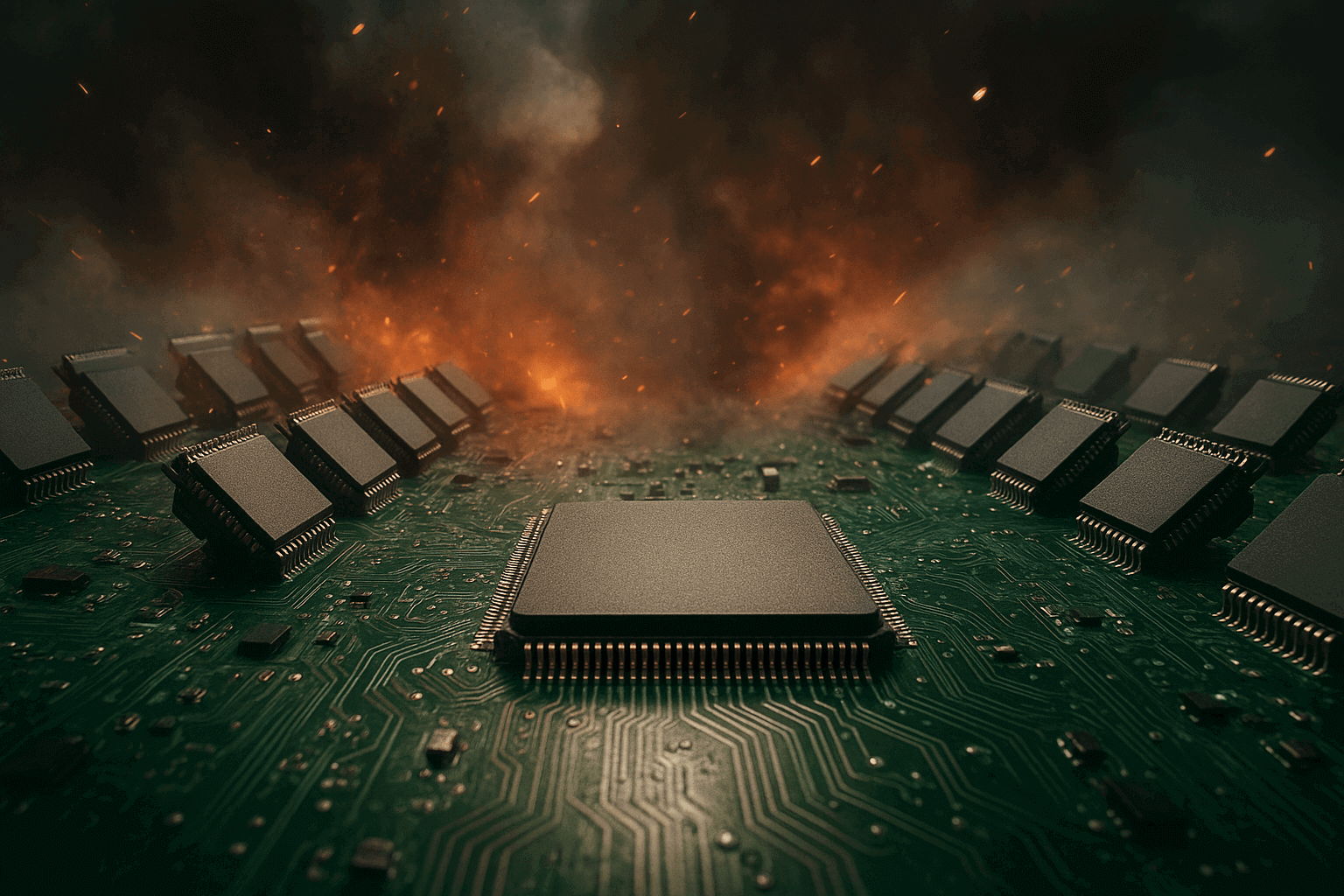
The global economy faces a critical juncture as the USA imposes tariffs across the majority of its trading partners, sparking the “chip wars” that directly threaten the current rapid growth in AI computing.
At the centre of this conflict lies artificial intelligence, with companies like NVIDIA caught between escalating trade restrictions and surging AI demand.
As AI computing demands explode across industries, the semiconductor chips powering these systems have become essential infrastructure. When US tariffs disrupt the flow of these critical components from China and other trading partners, the ripple effects directly impact AI development and deployment costs worldwide.
The Rise of Tariffs and Global Trade Tensions
The current chip wars represent a strategic attempt by the USA to reshape global supply chains and reduce technological dependence on China and other trading partners.
The US has implemented sweeping tariff policies targeting semiconductor manufacturing and AI-related hardware, directly impacting companies like NVIDIA that supply critical AI chips globally.
Unlike historical trade disputes, today’s tariffs target the fundamental building blocks of AI computing.
When governments restrict access to advanced semiconductors, they’re controlling the raw materials needed for AI innovation and the current rapid growth in AI computing.
Economic Impact of Tariffs
Global supply chains now face unprecedented disruption from US tariffs. When semiconductor facilities across multiple trading partners face restrictions, production timelines for AI systems extend and costs increase dramatically.
Economic forecasting has become challenging as companies grapple with increased costs and uncertain access to critical AI components.
Growth projections for AI computing which once seemed conservative now appear optimistic given the tariff environment.
Businesses face impossible choices: absorb higher AI infrastructure costs or pass them to customers. Companies must now factor USA-China tensions and broader trade restrictions into every AI investment decision.
Effects on AI Computing and the Semiconductor Industry
The rapid growth in AI computing depends entirely on specialised semiconductors that cost billions to develop. Companies like NVIDIA, which dominate the AI chip market, find themselves caught between US tariffs and global AI demand from all trading partners.
Data centres face acute challenges in this tariff environment.
These facilities require massive quantities of specialised hardware, often sourced from countries now subject to US tariffs. Cost increases directly impact cloud service pricing and AI accessibility.
Smaller AI companies feel the pressure most acutely. While tech giants can absorb higher component costs, emerging companies often lack this flexibility, potentially concentrating AI development among only the largest players capable of navigating tariff costs.
Supply chain restrictions create a feedback loop where current disruptions limit tomorrow’s AI innovation capacity and therefore it’s important to limit their disruptions.
Broader Consequences for Global Tech and Trade
The chip wars extend beyond semiconductors to threaten the current rapid growth in AI computing. Cloud-based AI services that democratised access to advanced computing now face pricing pressures from US tariffs on trading partners.
Consumer technology prices reflect these tensions. Smartphones, laptops, and AI-powered devices depend on global supply chains that tariffs disrupt, representing a shift toward more expensive AI technology.
Looking Ahead: Possible Outcomes
The most optimistic outcome involves new international agreements creating stable frameworks for AI technology trade between the USA and its trading partners.
More likely, we’ll see parallel AI ecosystems develop as different geopolitical blocs create competing technology stacks, potentially slowing the current rapid growth in AI computing.
The most concerning scenario involves escalating restrictions that fragment global AI development. Companies like NVIDIA may struggle to serve global markets, forcing separate AI ecosystems and reducing innovation speed.