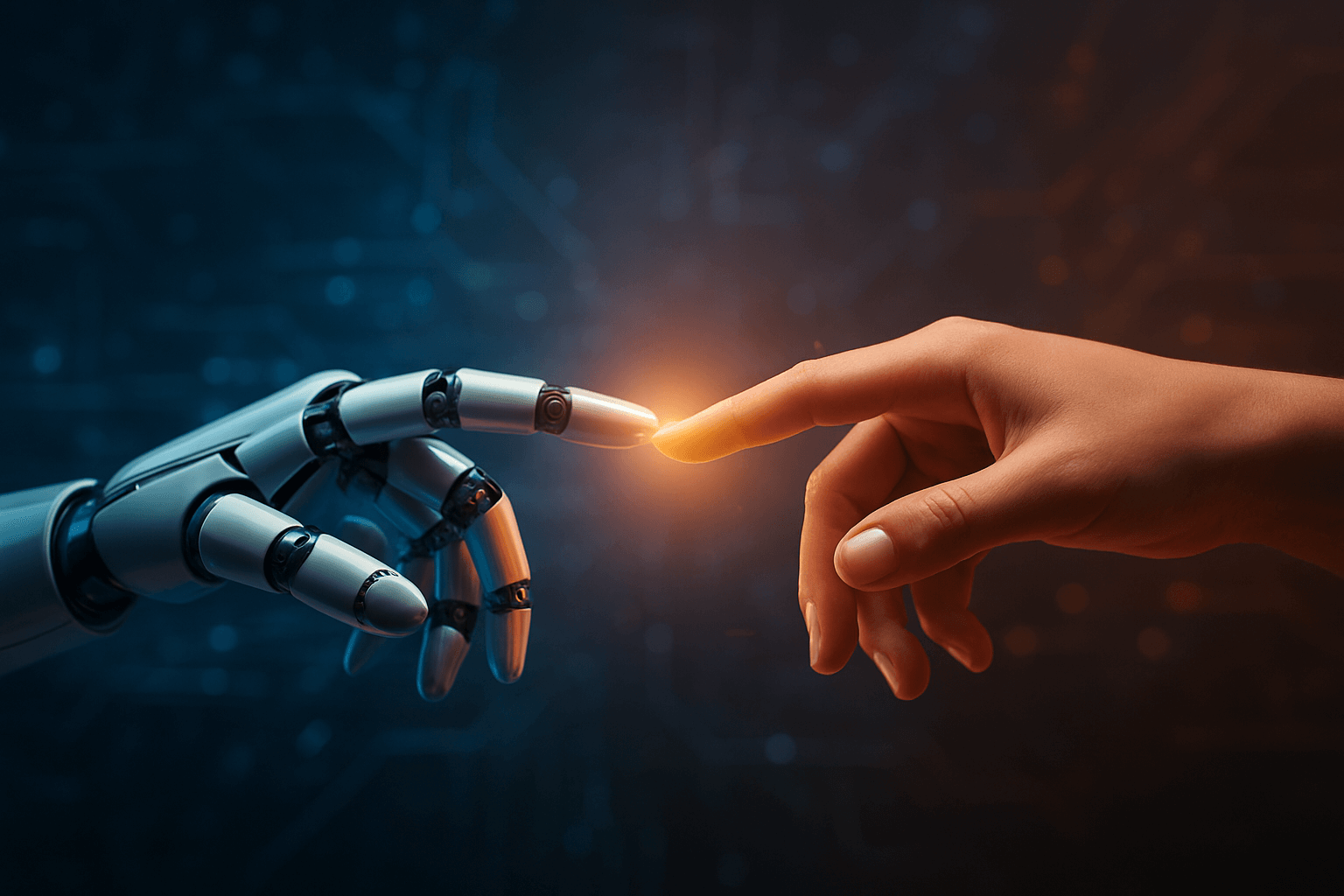
Why Human Creativity and Emotional Intelligence Will Be the Differentiator.
The workplace is changing fast.
Machines handle more tasks every day, from processing invoices to scheduling meetings. Yet something fundamental remains unchanged: the need for genuine human connection and creative thinking in business success.
While AI excels at efficiency and data analysis, it cannot replicate the nuanced understanding that comes from lived experience.
The future belongs to organisations that combine machine capabilities with distinctly human strengths—creativity, emotional intelligence, and authentic storytelling.
When Machines Excel and Where They Fall Short
It’s no secret that automation has transformed how we work.
Customer service chatbots respond to enquiries 24/7. Algorithms analyse market trends in seconds. Software automates payroll, inventory management, and even basic design tasks.
These advances bring clear benefits.
Machines work faster than humans, make fewer calculation errors, and process massive datasets. But efficiency has limits.
AI systems struggle when situations require context, intuition, or a genuine understanding of human motivation. They can analyse sentiment in text, but cannot truly comprehend the emotional weight behind a customer’s complaint.
Creativity and Emotional Intelligence as Differentiators
Human creativity goes beyond generating ideas. It involves connecting seemingly unrelated concepts and solving problems in unexpected ways.
Consider how Apple didn’t just build better computers—they reimagined how technology fits into daily life. These breakthroughs required creative vision that no algorithm could produce.
Emotional intelligence encompasses self-awareness, empathy, and social skills. Leaders with high EQ read between the lines during difficult conversations.
They sense when team members feel overwhelmed before productivity drops. In customer relationships, emotional intelligence makes the difference between transaction and connection.
Emotional intelligence correlates strongly with leadership effectiveness and team performance. Organisations that prioritise EQ development see improved collaboration, customer satisfaction, and employee retention.
The Power of Human Storytelling
Storytelling represents one of humanity’s oldest communication tools. While AI can generate narratives, it cannot create stories that truly resonate with human experience. Authentic storytelling requires understanding audience emotions, cultural context, and shared values.
Great leaders use storytelling to inspire teams during challenging times. They share personal failures that led to growth and connect individual contributions to larger purposes. These narratives motivate in ways that data presentations cannot.
Building the Future Advantage
The most competitive organisations will master human-AI collaboration.
Sales teams can use AI to analyse customer data while applying emotional intelligence to build meaningful relationships. Marketing departments can leverage automation for campaign management while relying on human creativity for compelling messaging.
Jobs requiring high levels of complex human judgment and decision-making will see continued growth, even as routine tasks become automated.
Smart businesses are investing in creativity and emotional intelligence development through design thinking workshops, communication training, and leadership programmes focused on EQ skills. They create environments where both technological tools and human intuition are valued and integrated effectively.
The future workplace will not be about humans versus machines. It will be about humans working with machines in ways that amplify the best of both.
Companies that master this balance will create experiences competitors cannot easily replicate, building sustainable advantages through the irreplaceable human touch.