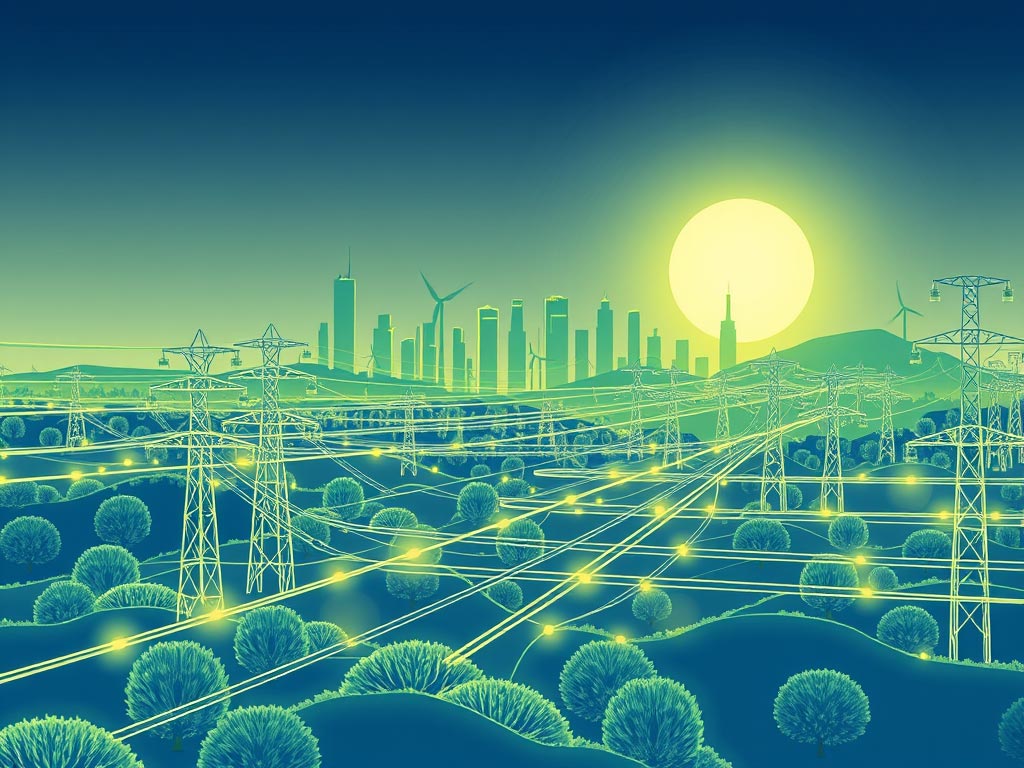
Smart grids merge information technology with traditional electricity networks to create a more responsive, efficient power system.
As climate concerns grow and energy demands increase, updating our aging electrical infrastructure has become essential. This article explains:
- What smart grids are
- Their benefits
- Global usage
- Their role in creating a sustainable energy future
What Are Smart Grids?
A smart grid combines digital communication technology with the electrical grid—the vast network of transmission lines, substations, and transformers that deliver electricity from power plants to your home or business.
Unlike conventional grids that primarily send electricity in one direction, smart grids include:
- Smart meters that track consumption in real time
- Sensors throughout the network that monitor conditions
- Two-way communication systems between utilities and consumers
- Automated systems that can quickly respond to changes
These components allow for data collection, analysis, and grid management that weren’t possible with older systems.
The grid becomes “smart” when it can gather information about supply and demand patterns and adjust accordingly.
Benefits of Smart Grids
The advantages of smart grid technology extend to utilities, consumers, and the environment.
Better Efficiency
Smart grids reduce energy waste during transmission and distribution. Utilities can better manage supply and demand by monitoring usage patterns, decreasing the need for excess capacity.
Environmental Advantages
By making it easier to integrate renewable energy sources, smart grids help reduce carbon emissions. They can balance the intermittent nature of renewables by storing excess energy or managing demand when supply fluctuates.
Increased Reliability
One of the most noticeable benefits for consumers is improved reliability. Smart grids can detect outages instantly, sometimes even predicting failures before they happen. This allows for faster repairs and fewer service interruptions. Smart grids can isolate damaged sectors during storms or natural disasters while maintaining service to unaffected areas.
Cost Reduction
While initial investment is substantial, smart grids offer long-term savings. Utilities spend less on maintenance and operations, and these savings can be passed to consumers. Additionally, consumers can access real-time pricing information, allowing them to adjust usage during periods when electricity costs less.
Consumer Control
Smart grids give people more control over their energy usage. With access to detailed consumption data, consumers can make informed decisions about when and how they use electricity.
Global Adoption and Current Usage
Smart grid implementation varies widely worldwide, with some countries leading the way while others are just beginning their transition.
The United Kindom, United States, China, Japan, and several other European nations like Germany and Italy have significantly progressed in developing smart grid infrastructure.
For example, Italy completed one of the first nationwide rollouts of smart meters, while South Korea has constructed entire “smart cities” with integrated energy systems.
Many developing nations also invest in modern technology, sometimes leapfrogging older technologies entirely. India, for instance, has committed to massive grid modernisation programmes as part of its green energy goals.
Government policies play a crucial role in smart grid adoption. Countries with strong regulatory support and investment incentives have seen faster implementation.
Many European Union countries have set ambitious targets for smart meter deployment. As a result, almost 60 percent of electricity customers in the European Union had a smart meter at the end of 2023 – a figure that’s forecast to rise to as much as 80 percent by 2029.
Future Potential
Smart grids will play a vital role in achieving global sustainability goals. By enabling greater integration of renewable energy and improving overall efficiency, they help move us toward net-zero carbon emissions targets.
Looking ahead, several promising technologies may further enhance smart grid capabilities:
- Artificial intelligence for grid management that can predict and respond to changes without human intervention
- Advanced energy storage systems that help balance supply and demand
- Microgrids that can operate independently during emergencies
- Electric vehicle integration that uses car batteries as distributed storage
These innovations will create even more flexible, resilient energy systems capable of meeting our changing needs.
Conclusion
Smart grids represent a necessary evolution of our electrical systems. By blending digital technology with physical infrastructure, they offer a path toward cleaner, more reliable, and more efficient energy.
While challenges exist—particularly in cost, security, and regulatory alignment—the long-term benefits make this transition worthwhile. Smart grid adoption will continue to accelerate as technology improves and costs decrease.
The question isn’t whether we should adopt smart grids for a sustainable energy future, but how quickly we can implement them. Governments, utilities, and consumers all have roles to play in supporting this critical infrastructure upgrade. By working together, we can build an electrical system that meets our needs today while preparing us for tomorrow’s challenges.